
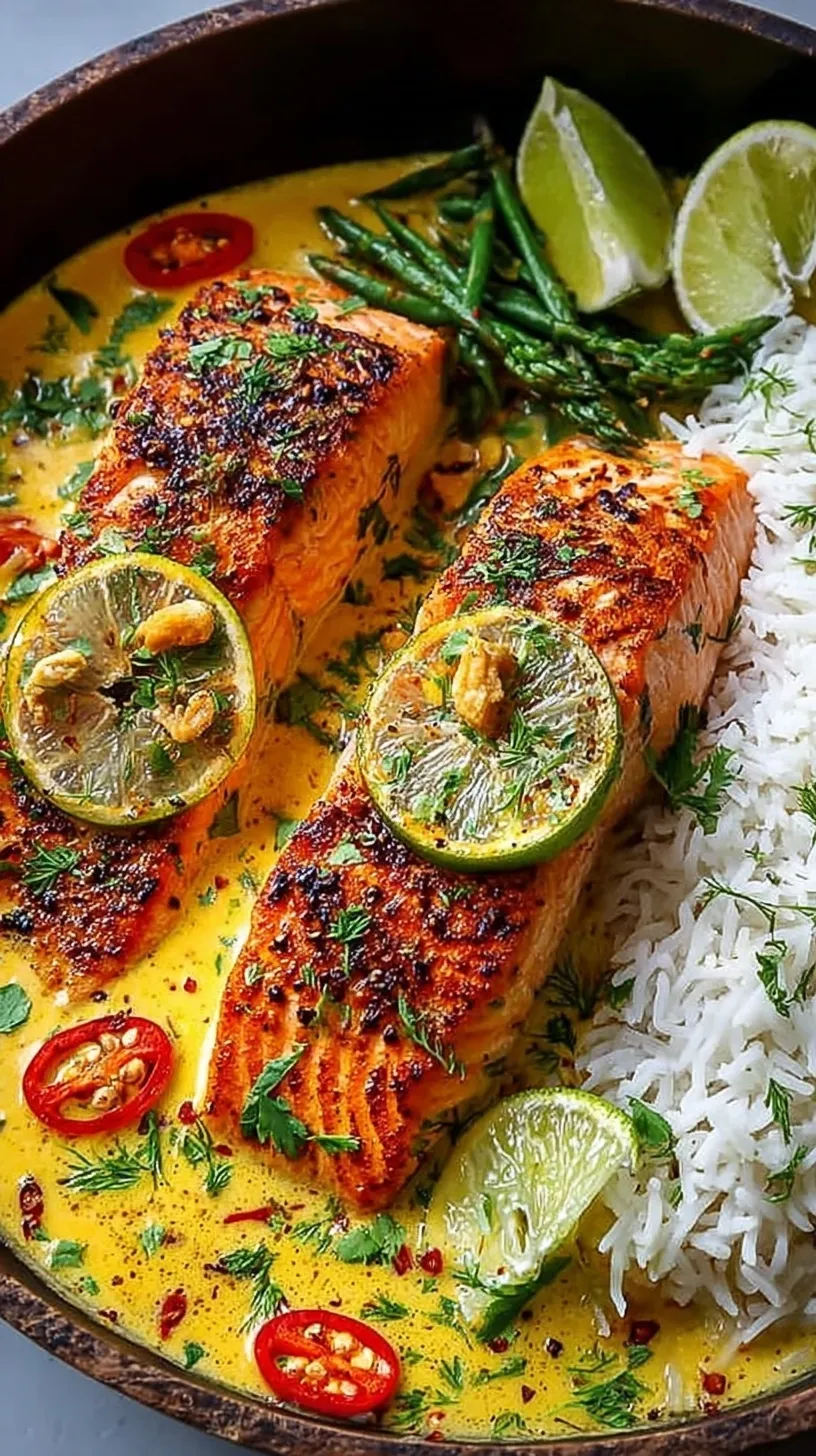
Are you craving something warm and vibrant for a chilly evening? This Coconut Curry Salmon is the perfect way to brighten up your winter nights. It delivers a punch of flavor without any of the stress.
You deserve a meal that feels like a treat but takes minimal effort. This recipe promises a silky, fragrant sauce and perfectly seared fish every single time. It is a restaurant-quality dish made right in your own kitchen.
Why This Recipe Works
This dish is a favorite because it balances rich healthy fats with zesty aromatics. The garlic butter adds a luxurious finish that rounds out the spice. You will love that it only requires one single pan for everything.
It is the ultimate weeknight dinner solution for busy schedules. You get a high-protein meal that feels elegant enough for a date night. Plus, the 35-minute total time means you can relax sooner.
The Easy Process
We start by getting a beautiful golden crust on the salmon fillets. This step ensures the fish stays juicy and flaky inside the sauce. Using high heat for the sear is the secret to success.
After searing, the sauce comes together quickly in the same skillet. You will deglaze the pan to catch every bit of flavor. It is a simple cooking method that even beginners can master with confidence.
Simple Ingredients
- 4 salmon fillets (6 oz each)
- 1/2 teaspoon kosher salt
- 1/4 teaspoon black pepper
- 1 tablespoon olive oil
- 2 tablespoons unsalted butter
- 4 cloves garlic, minced
- 1 teaspoon fresh ginger, grated
- 1 medium shallot, finely diced
- 2 tablespoons Thai red curry paste
- 1 can (13.5 oz) full-fat coconut milk
- 1 tablespoon fresh lime juice
- 2 cups fresh baby spinach
- Fresh cilantro for garnish
Step-by-Step Directions
- Pat the salmon fillets dry and season both sides with salt and black pepper.
- Heat olive oil in a large skillet over medium-high heat. Sear the salmon for 3-4 minutes per side until golden brown and crusty; remove salmon from the skillet and set aside on a plate.
- Reduce heat to medium. Add butter to the skillet and melt until bubbling. Add shallots, garlic, and ginger, sautéing for 2 minutes until translucent and fragrant.
- Incorporate the red curry paste into the aromatics, stirring constantly for 1 minute to toast the spices.
- Pour in the coconut milk and bring to a gentle simmer. Use a wooden spoon to deglaze the pan by scraping up the browned bits (fond) from the bottom.
- Simmer the sauce for 5 minutes until slightly thickened. Stir in the lime juice and baby spinach, cooking until the spinach has wilted.
- Place the salmon fillets back into the skillet. Spoon the curry sauce over the fish and cook for an additional 2 minutes to warm through.
- Garnish with fresh cilantro and serve over rice or cauliflower rice.
Best Ways to Enjoy
I love serving this Coconut Curry Salmon over a bed of fluffy jasmine rice. The rice soaks up that zesty, creamy sauce perfectly. For a lighter option, try it with cauliflower rice or zoodles.
Add a few extra lime wedges on the side for a fresh pop. A crisp cucumber salad makes a refreshing side dish for this meal. It is a balanced plate that leaves you feeling satisfied.
Make-Ahead Advice
You can store leftovers in an airtight container for up to two days. Keep it in the fridge to maintain the fresh flavors of the curry. I do not recommend freezing this dish as the sauce may separate.
When you are ready to eat, reheat it gently on the stove. Use low heat to avoid overcooking the delicate salmon fillets. Add a splash of water if the sauce is too thick after chilling.
Tips for Best Results
- Pat your salmon completely dry to ensure a crisp, golden sear.
- Don’t skip toasting the curry paste to unlock the deepest flavor profile.
- Avoid overcooking the fish by removing it just before it is fully done.
- Use full-fat coconut milk for the most luxurious and silky sauce texture.
- Add extra spinach at the end if you want a bigger nutritional boost.
- Swap the shallots for yellow onion if that is what you have.
- Serve with warm naan bread to scoop up every drop of curry.
Easy Swaps
- Use shrimp or white fish if you want to change the protein.
- Switch to green curry paste for a more herbal, spicy flavor profile.
- Try kale instead of spinach for a heartier, more textured green.
- Add a squeeze of orange juice for a sweeter citrus note.
Common Questions
Can I use frozen salmon?
Yes, you can use frozen fillets for this recipe. Just make sure to thaw them completely before cooking. Pat them very dry to get that perfect crust.
Is this recipe very spicy?
Red curry paste has a mild to medium heat level. The coconut milk mellows it out significantly for a family-friendly taste. You can add red pepper flakes if you want more kick.
How do I know the salmon is done?
The salmon should flake easily with a fork when it is ready. It will turn from translucent to an opaque pink color. An internal temperature of 145°F is the standard for safety.
I hope this vibrant dish brings a little extra warmth to your table tonight. It is such a joy to share these simple, flavor-packed meals with you.
— Emily
Ingredients
Method
- Pat the salmon fillets dry and season both sides with salt and black pepper.
- Heat olive oil in a large skillet over medium-high heat. Sear the salmon for 3-4 minutes per side until golden brown and crusty; remove salmon from the skillet and set aside on a plate.
- Reduce heat to medium. Add butter to the skillet and melt until bubbling. Add shallots, garlic, and ginger, sautéing for 2 minutes until translucent and fragrant.
- Incorporate the red curry paste into the aromatics, stirring constantly for 1 minute to toast the spices.
- Pour in the coconut milk and bring to a gentle simmer. Use a wooden spoon to deglaze the pan by scraping up the browned bits (fond) from the bottom.
- Simmer the sauce for 5 minutes until slightly thickened. Stir in the lime juice and baby spinach, cooking until the spinach has wilted.
- Place the salmon fillets back into the skillet. Spoon the curry sauce over the fish and cook for an additional 2 minutes to warm through.
- Garnish with fresh cilantro and serve over rice or cauliflower rice.